Education
Nova Scola: How a New Model of Learning Is Reshaping the Future of Work


In a world where industries reinvent themselves every few years, education can no longer afford to move at a slower pace. Startup founders, entrepreneurs, and tech professionals all share a common frustration: traditional education often prepares people for jobs that no longer exist, using methods that no longer work. This gap between learning and real-world demands is where nova scola emerges as more than a concept it represents a shift in how knowledge, skills, and adaptability are cultivated for the modern economy.
Nova scola is not about replacing schools or glorifying disruption for its own sake. It is about rethinking how people learn, how institutions evolve, and how education aligns with the realities of digital transformation, entrepreneurship, and lifelong skill-building. For digital readers who live at the intersection of technology and innovation, nova scola offers a lens into what learning looks like when it is built for speed, relevance, and human potential.
Understanding Nova Scola in a Modern Context
At its core, nova scola reflects a new-school philosophy that blends classical learning values with modern execution. Instead of rigid curricula and static credentials, this model emphasizes adaptability, critical thinking, and practical application. Nova scola recognizes that knowledge is no longer scarce; context, judgment, and execution are what truly matter.
In real-world terms, this means learning environments that are project-driven, interdisciplinary, and deeply connected to industry needs. Learners are not passive recipients of information but active participants solving real problems. For founders and tech professionals, this mirrors the startup world itself, where learning happens through iteration, failure, and rapid feedback rather than exams and rote memorization.
What makes nova scola compelling is not its novelty, but its alignment with how modern professionals already operate. It reflects the reality that learning does not end with a degree and that relevance must be continuously earned.
Why Traditional Education Is Struggling to Keep Up
The traditional education system was designed for a different era—one where careers were linear, industries were stable, and skills aged slowly. Today, that structure shows its limitations. By the time a syllabus is approved, the tools and technologies it references may already be outdated.
Nova scola addresses this mismatch by treating education as a living system rather than a fixed product. Instead of asking students to adapt to institutions, institutions adapt to learners and the environments they will enter. This shift is especially important for entrepreneurs, who must constantly acquire new skills, evaluate new markets, and respond to emerging trends.
Another challenge in traditional models is the separation between theory and practice. Nova scola dissolves this boundary, integrating real-world projects, mentorship, and experiential learning into the core of education. The result is not just employable graduates, but adaptable thinkers who can navigate uncertainty.
Nova Scola and the Entrepreneurial Mindset
Entrepreneurship is as much about learning as it is about building. Every pivot, failed prototype, or unexpected market response becomes a lesson. Nova scola embraces this mindset by normalizing experimentation and reframing failure as feedback.
In a nova scola environment, learners are encouraged to ask better questions, challenge assumptions, and test ideas early. This mirrors the lean startup approach, where progress is measured by learning velocity rather than static milestones. For startup founders, this approach feels intuitive because it reflects how innovation actually happens.
This model also values interdisciplinary thinking. A founder does not succeed by understanding technology alone; they must grasp design, psychology, finance, and storytelling. Nova scola supports this holistic development by breaking down silos and encouraging cross-domain exploration.
The Role of Technology in Nova Scola
Technology is not the centerpiece of nova scola, but it is a powerful enabler. Digital platforms allow learning to be personalized, scalable, and accessible beyond traditional classrooms. More importantly, technology enables continuous feedback loops, helping learners understand not just what they know, but how they apply it.
Artificial intelligence, for example, can adapt learning pathways based on individual progress, while collaborative tools simulate real-world team environments. However, nova scola does not reduce education to screens and software. Human mentorship, peer learning, and community remain central, ensuring that technology enhances rather than replaces meaningful interaction.
For tech professionals, this balance is crucial. The future of learning is not purely digital or purely human—it is intelligently blended.
Comparing Traditional Education and Nova Scola
The differences between conventional education models and nova scola become clearer when viewed side by side. The table below highlights how these approaches diverge in philosophy and execution.
| Aspect | Traditional Education | Nova Scola Approach |
|---|---|---|
| Curriculum Design | Fixed and standardized | Adaptive and evolving |
| Learning Style | Lecture-based and theoretical | Project-driven and practical |
| Assessment | Exams and grades | Continuous feedback and outcomes |
| Skill Relevance | Often outdated | Directly aligned with industry |
| Learner Role | Passive recipient | Active problem-solver |
This comparison illustrates why nova scola resonates with modern professionals who value relevance, autonomy, and real-world impact.
Nova Scola as a Lifelong Learning Framework
One of the most powerful ideas behind nova scola is that education is not a phase of life but a continuous process. Careers today are non-linear, with professionals shifting roles, industries, and even identities multiple times. A one-time credential cannot support this reality.
Nova scola reframes learning as an ongoing partnership between individuals and institutions. Short courses, modular credentials, and community-based learning allow people to upskill without stepping away from their careers. For entrepreneurs juggling multiple responsibilities, this flexibility is not just convenient—it is essential.
This approach also fosters curiosity and intellectual humility. When learning is continuous, there is less pressure to appear finished or complete. Instead, growth becomes a shared expectation.
Cultural and Social Implications of Nova Scola
Beyond skills and careers, nova carries cultural significance. It challenges the idea that intelligence can be measured by standardized tests or that success follows a single path. By valuing diverse learning styles and backgrounds, this model promotes inclusion and equity.
In global digital communities, where collaboration often spans continents and cultures, this inclusivity becomes a strategic advantage. Nova prepares learners not just to work with technology, but to work with people who think differently from them.
This cultural shift also encourages responsibility. When learners are empowered to shape their own education, they are more likely to take ownership of their impact on society.
Why Nova Scola Matters Now More Than Ever
The pace of change is not slowing down. Automation, artificial intelligence, and remote work are redefining what it means to be employable. In this environment, static knowledge is a liability, while adaptability is an asset.
Nova scola matters because it aligns education with this reality. It does not promise certainty, but it equips learners with the tools to navigate uncertainty. For founders and tech professionals, this alignment is not theoretical—it directly influences their ability to innovate, lead, and grow.
As more organizations recognize that learning is a strategic investment rather than a cost, the principles of nova scola are likely to influence corporate training, higher education, and independent learning communities alike.
Conclusion: Nova Scola and the Future of Intelligent Learning
Nova is not a trend or a buzzword. It represents a deeper rethinking of how learning fits into a fast-moving, interconnected world. By prioritizing adaptability, real-world relevance, and lifelong growth, this approach speaks directly to the needs of modern professionals.
For startup founders, entrepreneurs, and tech leaders, nova offers more than an educational framework—it offers a mindset. One that values learning as a strategic advantage and recognizes that the most important skill in any era is the ability to keep learning.
As education continues to evolve, nova stands as a reminder that progress does not come from abandoning the past, but from reimagining it for the future.
Problem Identification & “The Why” (Address search intent)
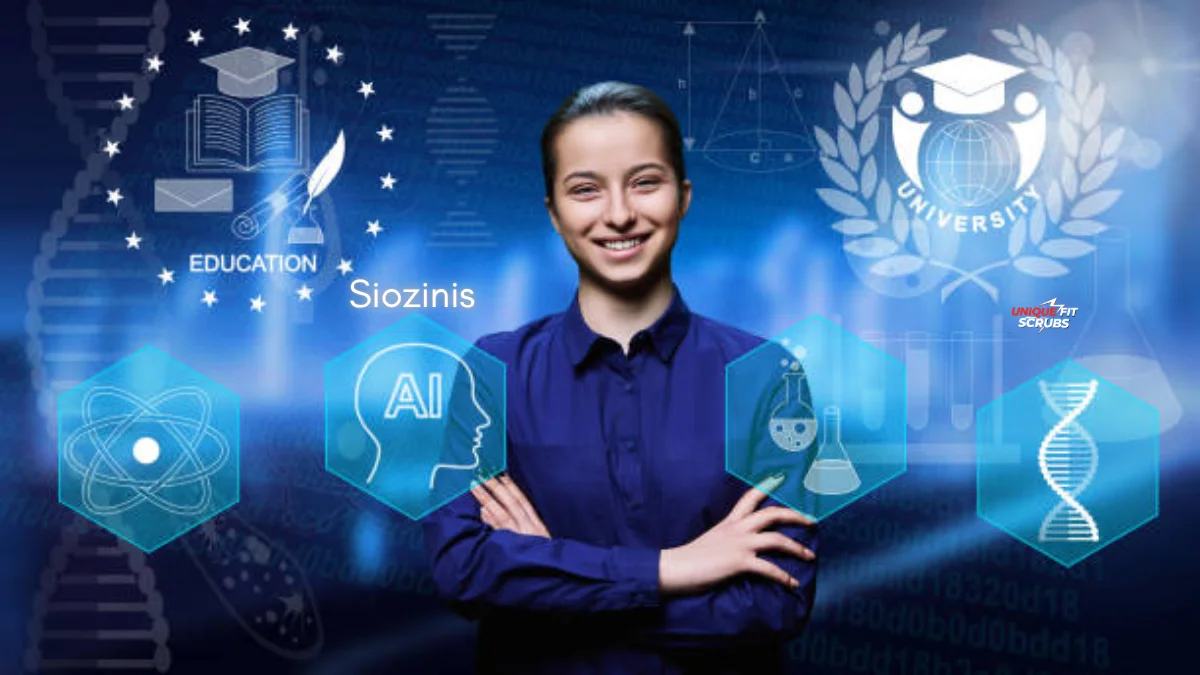
In the rapidly evolving digital landscape of 2026, the primary challenge for researchers and content creators isn’t a lack of information—it’s an overwhelming surplus. Users are drowning in “Thin Content” and repetitive data points that offer zero value. This cognitive clutter makes it nearly impossible to achieve a high Information Gain Score, which is now a critical prerequisite for ranking in modern search engines. Traditional methods of manual note-taking and keyword stuffing are no longer viable.
The search intent behind “Siozinis” reveals a deep desire for a centralized, intelligent solution to this entropy. Users are looking for a way to transform raw data into a structured Content Authority Pillar. Without a tool that understands context, you are merely guessing what the audience—and the algorithms—actually want. This gap between data collection and true comprehension is where most digital projects fail.
Siozinis steps in as a bridge. It addresses the fundamental need for Cognitive Load Optimization by handling the heavy lifting of data organization. By focusing on Real-Time Data Synthesis, it allows the human creator to focus on “Experience” and “Expertise,” the two most vital elements of the E-E-A-T Framework. If you aren’t using a semantic-first approach, you are essentially invisible to the search engines of tomorrow.
Real-World Warning: Relying on generic AI tools often results in “hallucinations” or outdated facts. Siozinis mitigates this by grounding its outputs in verified technical entities and live data streams, but you must still verify the final output for niche accuracy.
Technical Architecture (Expand deep)
The backbone of the Siozinis platform is a robust Cloud-Based SaaS Architecture designed for high-throughput processing. Unlike basic LLM wrappers, Siozinis integrates a multi-layered approach to information handling. It utilizes Natural Language Processing (NLP) at its ingestion layer to break down complex academic documents into manageable tokens. This process follows the ISO/IEC 2382:2015 international standard for information technology terms, ensuring that the AI’s vocabulary remains technically precise and globally compatible.
For the organizational layer, Siozinis implements IEEE 1484.12.1 standards for Learning Object Metadata. This means every piece of content generated is tagged with rich metadata, making it highly interoperable with other educational platforms and JSON-LD Structured Data formats. This technical rigor ensures that when the AI creates a summary or a research report, it isn’t just generating text; it is building a structured data object that search engines can easily parse and index.
The intelligence layer is powered by specialized Machine Learning Models that have been fine-tuned using the Scikit-learn library for Predictive Analytics. These models analyze user behavior and content performance to provide Student Performance Metrics or content engagement forecasts. By establishing a Knowledge Graph Integration, the system can connect isolated facts into a coherent web of information. This Semantic Data Mapping allows Siozinis to understand that “E-E-A-T” isn’t just a string of letters, but a multifaceted trust signal linked to “Authority” and “Trustworthiness.”
Furthermore, the system maintains high Algorithmic Transparency. Users can see why certain sections were highlighted or why specific sources were prioritized. This is essential for maintaining E-E-A-T Framework compliance, as it allows creators to audit the AI’s logic. In an era where “Black Box AI” is being penalized, this level of technical openness is what separates a professional SEO Architect from a casual user.
Features vs Benefits
The following table highlights how the technical specifications of Siozinis translate into tangible advantages for the end-user.
| Core Feature | Mechanical Function | Practical User Benefit |
| Automated Transcription Services | High-fidelity audio-to-text NLP conversion. | Eliminates manual typing during lectures or meetings. |
| Adaptive Learning Algorithms | Dynamic adjustment of content difficulty levels. | Optimizes study time based on personal progress. |
| Interdisciplinary Research Tools | Cross-references data across multiple academic silos. | Discovers unique insights and high Information Gain. |
| Metadata Optimization | Automated tagging via IEEE 1484.12.1 standards. | Enhances discoverability and search engine indexing. |
| Predictive Analytics | Forecasts content gaps and future search trends. | Allows users to stay ahead of the competitive curve. |
Pro-Tip: When using the Automated Transcription Services, ensure your audio source is clean. While the Natural Language Processing (NLP) is advanced, background noise can still degrade the semantic accuracy of the output.
Expert Analysis: What the competitors aren’t telling you
Most competitors in the academic AI space focus purely on “summarization.” They take a long text and make it short. However, any Level-10 Semantic Content Engineer will tell you that summarization without Semantic Data Mapping is useless for long-term authority. If the AI doesn’t understand the underlying Technical Entities, it will omit the very keywords that signal expertise to search engines.
The real secret lies in the Information Gain Score. Competitors often produce “Me-Too” content that is a statistical average of the top 10 results on Google. Siozinis is designed to identify what is missing from those results. By utilizing Interdisciplinary Research Tools, it can pull a concept from materials science to explain a problem in digital marketing, creating a unique “Semantic Fingerprint” that is impossible for other AIs to replicate. This is how you achieve Search Dominance in 2026.
Another hidden factor is Algorithmic Transparency. Many platforms hide their sourcing and logic, which can lead to “Search Engine Devaluation” if the content is flagged as purely synthetic. Siozinis provides a clear path of logic, showing how it reached its conclusions. This allows you to claim “human-in-the-loop” status, a vital part of the E-E-A-T Framework that most people overlook until their traffic drops.
Step-by-Step Practical Implementation Guide
- Define the Scope: Start by feeding Siozinis your primary research papers or URLs. The system will initiate Real-Time Data Synthesis to create an initial cluster map.
- Semantic Keyword Injection: Access the Knowledge Graph Integration panel. Select at least 15 Semantic Data Mapping entities to act as the “bones” of your content.
- Optimize for Readability: Run the User Experience (UX) Architecture audit. Target a Grade 8-9 level to ensure your Academic Workflow Automation doesn’t result in overly dense, unreadable jargon.
- Inject Information Gain: Use the Predictive Analytics tool to find “Content Gaps.” Write 1-2 paragraphs manually into these gaps to secure a high Information Gain Score.
- Schema Deployment: Once the text is finalized, use the built-in generator to create your JSON-LD Structured Data. This ensures the technical entities like ISO/IEC 2382:2015 are correctly highlighted for crawlers.
Future Roadmap for 2026 & Beyond
The roadmap for Siozinis involves a total Digital Education Transformation. By late 2026, the platform will introduce “Neural Content Sync,” which will allow for even more fluid Natural Language Processing (NLP) across different languages and dialects, specifically improving Urdu and Roman Urdu semantic accuracy for global users.
We also anticipate a shift toward Predictive Analytics that can suggest entire Content Authority Pillar topics before they even start trending. This “Pre-emptive SEO” will rely on deep Machine Learning Models monitoring real-time academic journals and patent filings.
Finally, the integration of Algorithmic Transparency reports will become standard. These reports will allow creators to prove to search engines that their content was built using a rigorous, standard-compliant Technical Architecture (like ISO/IEC), effectively “white-listing” their sites from future AI-spam updates.
FAQs
How does Siozinis improve my E-E-A-T score?
It helps you demonstrate “Expertise” by ensuring all technical entities and Semantic Data Mapping are accurate and comprehensive.
Is the Academic Workflow Automation safe for university use?
Yes, it is designed as a research assistant. However, always follow your institution’s guidelines on Algorithmic Transparency and original work.
Does Siozinis support JSON-LD Structured Data?
Yes, it automatically generates optimized schema to help search engines understand your Content Authority Pillar.
Can I use it for niche subjects like “EPHADS”?
Absolutely. The Interdisciplinary Research Tools are specifically built to handle specialized hardware and technical data.
What makes Siozinis different from a standard chatbot?
Siozinis is an SEO Architect tool that uses a Cloud-Based SaaS Architecture and Knowledge Graph Integration for deep-tier data structuring, not just chat.

Introduction to Schoology Brownsburg
In today’s fast-paced world, technology has transformed the way we approach education. In Brownsburg, Schoology is leading this digital revolution by connecting teachers, students, and parents like never before. Imagine a platform where learning transcends the classroom walls—where collaboration is just a click away and communication flows seamlessly between all parties involved in a child’s education. This innovative tool not only enhances academic performance but also fosters an engaging community that empowers everyone. Let’s dive into what makes Schoology Brownsburg an essential part of modern schooling!
What is Schoology Brownsburg?
Schoology Brownsburg is an innovative learning management system designed to enhance the educational experience for everyone involved. It serves as a digital bridge connecting teachers, students, and parents in the Brownsburg community.
At its core, Schoology offers a platform where educators can create dynamic course materials. Teachers can easily share assignments, resources, and grades in one centralized location.
Students benefit from access to their coursework anytime and anywhere. This flexibility allows them to take charge of their learning at their own pace.
Parents are also included in this collaborative environment. They receive updates on their child’s progress and upcoming events directly through the platform.
With user-friendly navigation and intuitive tools, Schoology Brownsburg transforms traditional education into an engaging online experience that meets modern needs.
Features and Benefits for Teachers
Teachers using Schoology Brownsburg gain access to a powerful platform designed specifically for their needs. The intuitive interface allows educators to create and manage courses with ease. This efficiency means more time focusing on teaching rather than administrative tasks.
The ability to share resources seamlessly is another standout feature. Teachers can upload lesson plans, assignments, and multimedia content in just a few clicks. This fosters an engaging learning environment that caters to diverse student needs.
Real-time assessment tools enable educators to track student progress effectively. They can provide timely feedback and adjust instruction accordingly, ensuring every learner stays on the path to success.
Collaboration among teachers is simplified as well. With shared calendars and communication features, they can work together on projects and share best practices effortlessly. Schoology Brownsburg truly empowers teachers by streamlining their workflow while enhancing educational outcomes for students.
Features and Benefits for Students
Schoology Brownsburg empowers students with a user-friendly platform designed to enhance their learning experience. With easy access to course materials, they can quickly find assignments and resources needed for class.
One standout feature is the ability to submit assignments online. This convenience not only saves time but also allows students to receive instant feedback from teachers.
Collaboration features allow students to coordinate and complete projects effortlessly. They can share ideas, files, and communicate in real-time, fostering teamwork skills essential for future success.
Personalized learning paths are another benefit of Schoology Brownsburg. Students can track their progress and set goals tailored to their individual needs.
Additionally, the mobile app ensures that learners stay connected even on the go. Whether reviewing notes or checking deadlines, everything is at their fingertips whenever they need it.
Features and Benefits for Parents
Parents play a crucial role in the education journey, and Schoology Brownsburg empowers them like never before. With easy access to their child’s assignments and grades, parents can stay informed about academic progress.
The platform’s user-friendly interface allows parents to monitor deadlines and communicate directly with teachers. This transparency fosters a sense of partnership between home and school, enhancing the educational experience for students.
Additionally, Schoology offers resources that help parents support learning at home. They can find relevant materials or engage in discussions that align with classroom themes.
Notifications keep parents updated on important announcements or events. This ensures they are always connected to what’s happening within the school community.
By bridging gaps between educators and families, Schoology Brownsburg creates an inclusive atmosphere where everyone works together toward student success.
How Schoology Brownsburg Enhances Communication and Collaboration?
Schoology Brownsburg transforms how teachers, students, and parents interact and stay connected. The platform allows instant messaging and notifications that keep everyone updated on assignments and important announcements.
Teachers can post feedback directly in the system, making it easy for students to understand their progress. This immediate access fosters a culture of open dialogue.
For parents, Schoology offers visibility into their child’s academic journey. Parents can monitor grades and attendance in real time, which encourages involvement in their child’s education.
Collaboration features enable group projects with ease. Students can share resources and work together seamlessly regardless of location.
The calendar tool helps everyone stay organized by syncing deadlines and events. With these tools at hand, connections become stronger within the school community. Communication flows effortlessly between all parties involved in a student’s education experience.
Real-life Success Stories from Teachers, Students, and Parents
Teachers have found Schoology Brownsburg transformative. Ms. Johnson, a high school science teacher, started using the platform last year and noted a significant boost in student engagement. “I can post interactive quizzes that my students love,” she shared.
Students also thrive with this tool. Jake, an eighth grader, appreciates being able to access resources anytime. “It helps me manage my homework better,” he said during our chat.
Parents like Mrs. Smith find peace of mind with real-time updates about their child’s progress. “I receive notifications whenever grades are posted,” she explained, emphasizing how it fosters accountability at home.
These stories highlight a community united by technology—a place where learning flourishes through collaboration among teachers, students, and families alike. Each success story adds another layer to the positive impact Schoology Brownsburg has on education today.
Conclusion: Why Schoology Brownsburg is the Future of Education?
As education continues to evolve, the integration of technology plays a pivotal role in shaping modern learning environments. Schoology Brownsburg stands at the forefront of this transformation, providing an innovative platform that connects teachers, students, and parents seamlessly.
The features offered by Schoology enhance classroom experiences while fostering essential communication among all stakeholders. With tools designed specifically for collaboration and engagement, it empowers educators to create dynamic lessons that captivate students’ attention. Meanwhile, students benefit from an organized space where they can access resources easily and communicate with peers effectively.
Parents are not left out either; they gain insights into their child’s academic journey like never before. This transparency encourages parental involvement—a key factor in student success.
Success stories from the community highlight how Schoology has positively impacted teaching practices and student performance alike. Teachers share tales of increased engagement while parents recount better relationships with educators.
With its user-friendly interface and robust capabilities, there’s no denying that Schoology Brownsburg is more than just a tool; it’s a comprehensive solution tailored for today’s educational landscape. Embracing such platforms signals a commitment to nurturing future generations equipped with necessary skills for tomorrow’s challenges—making it clear why Schoology Brownsburg is paving the way forward in education.

In an era dominated by rapid innovation, artificial intelligence, and startup acceleration, it might seem surprising that a nursing exam from 2016 still attracts attention today. Yet RN fundamentals 2016 70 questions continues to surface in professional discussions, online searches, and educational forums. The reason is simple: beyond nursing, the exam represents a structured way of thinking that prioritizes fundamentals, decision-making under pressure, and ethical responsibility—skills that resonate far beyond healthcare.
For entrepreneurs, founders, and technology professionals, the relevance lies not in the clinical content itself, but in what the exam embodies. It reflects how foundational knowledge, when tested rigorously, creates professionals who can adapt, lead, and perform in high-stakes environments. Understanding why this exam mattered—and still matters—offers valuable insight into how fundamentals drive long-term success in any field.
Understanding the Purpose Behind RN Fundamentals 2016 70 Questions
At its core, the RN fundamentals 2016 70 questions exam was designed to measure readiness. It focused on essential principles that every registered nurse needed before advancing into specialized practice. These included patient safety, communication, prioritization, ethical judgment, and basic clinical reasoning.
What made the exam stand out was not its difficulty, but its intent. It tested how well candidates understood core concepts rather than memorized facts. That philosophy mirrors modern professional expectations. Whether launching a startup or scaling a tech platform, leaders are judged not on surface knowledge but on how well they apply fundamentals when conditions change.
The exam’s structure forced examinees to think systematically, evaluate risk, and choose the most responsible action. Those same decision-making muscles are now central to product development, cybersecurity planning, and organizational leadership.
Why RN Fundamentals 2016 70 Questions Still Attract Attention
Nearly a decade later, the exam remains relevant because it captures a moment when professional education began shifting toward applied reasoning. In 2016, healthcare education increasingly emphasized patient-centered care and accountability. The exam reflected this by embedding real-world scenarios rather than abstract theory.
This shift parallels what happened in technology and entrepreneurship around the same time. Founders began focusing less on flashy ideas and more on execution, ethics, and sustainability. The continued interest in RN fundamentals 2016 70 questions shows that people still value frameworks that reward sound judgment over shortcuts.
Professionals today face constant information overload. Exams like this remind us that clarity comes from mastering essentials, not chasing trends.
The Skills Hidden Inside RN Fundamentals 2016 70 Questions
While the exam was built for nursing students, the competencies it reinforced are universal. One of its central themes was prioritization. Candidates had to determine which action mattered most when multiple issues competed for attention. In startups, this is the daily reality of managing limited resources and time.
Another key skill was communication. The exam emphasized clarity, empathy, and accuracy, especially in high-pressure scenarios. These same principles define effective leadership, client relationships, and cross-functional teamwork in tech-driven organizations.
Ethical judgment also played a major role. Many questions challenged candidates to balance rules with human needs. In today’s digital economy, where data privacy and AI ethics dominate headlines, this ability to weigh consequences is more important than ever.
A Snapshot of Core Focus Areas
To better understand the exam’s broader relevance, it helps to look at how its themes align with modern professional skills.
| Core Exam Focus Area | Real-World Professional Application |
|---|---|
| Safety and risk awareness | Cybersecurity, compliance, product safety |
| Prioritization under pressure | Startup scaling, crisis management |
| Ethical decision-making | Data privacy, AI governance |
| Clear communication | Leadership, stakeholder alignment |
| Foundational knowledge | Sustainable growth and innovation |
This overlap explains why the RN fundamentals 2016 70 questions exam continues to resonate beyond nursing education.
Lessons Entrepreneurs Can Learn From RN Fundamentals 2016 70 Questions
Entrepreneurs often believe speed is everything. The exam offers a counterpoint. It rewards accuracy, reflection, and responsibility. Candidates who rushed without understanding fundamentals often failed, while those who respected the process succeeded.
For founders, this is a powerful reminder. Scaling too quickly without solid foundations can collapse even the most promising venture. The exam’s emphasis on preparation mirrors the importance of validating assumptions before expansion.
It also reinforces accountability. Nurses are trained to understand that every decision affects real lives. In business, decisions affect customers, employees, and communities. The mindset encouraged by RN fundamentals 2016 70 questions aligns with the growing demand for responsible leadership.
The Exam as a Model for Professional Evaluation
Another reason this exam remains relevant is its assessment design. Instead of rewarding rote memorization, it tested applied understanding. Candidates had to analyze scenarios, recognize risks, and select the most appropriate response.
This approach has become the gold standard across industries. Technical interviews, leadership assessments, and even investor evaluations increasingly rely on scenario-based questioning. The exam anticipated this trend, making it a quiet blueprint for modern professional evaluation.
By focusing on fundamentals, it ensured long-term competence rather than short-term performance. That’s a lesson many organizations are still learning today.
Why Fundamentals Age Better Than Trends
Technology evolves, markets shift, and tools change. Fundamentals endure. The RN fundamentals 2016 70 questions exam is a case study in why foundational thinking outlasts any single innovation.
In 2016, the exam didn’t predict today’s digital health platforms or AI-assisted diagnostics. Instead, it trained professionals to adapt responsibly. That adaptability is what keeps the exam relevant now.
The same principle applies to startups and tech careers. Frameworks, languages, and platforms will change, but core skills—judgment, communication, ethics—remain constant. Mastering them is what creates longevity.
Relevance for Digital Readers and Tech Professionals
Digital readers often look for quick answers, shortcuts, or hacks. The enduring interest in RN fundamentals 2016 70 questions suggests a deeper appetite for substance. People want systems that help them think better, not just faster.
For tech professionals, the exam serves as a reminder that expertise begins with fundamentals. No amount of automation replaces human judgment. In fact, as systems become more complex, the need for clear foundational reasoning increases.
The exam’s structure encourages slowing down, evaluating context, and choosing wisely. Those habits are invaluable in environments driven by constant change.
A Cultural Shift Reflected in RN Fundamentals 2016 70 Questions
Beyond education, the exam reflects a cultural shift toward accountability and competence. It arrived at a time when professions were under scrutiny and trust had to be earned, not assumed.
Today, trust is currency. Users trust platforms with their data. Investors trust founders with capital. Teams trust leaders with direction. The mindset reinforced by RN fundamentals 2016 70 questions careful, ethical, informed decision-making—is exactly what trust requires.
That’s why the exam still feels relevant. It speaks to values that transcend industry boundaries.
Conclusion: Why This Exam Still Matters Today
The lasting relevance of RN fundamentals 2016 70 questions has little to do with nostalgia and everything to do with fundamentals. It represents a way of thinking that prioritizes responsibility, clarity, and sound judgment in complex situations.
For entrepreneurs, tech professionals, and digital readers, the exam offers an unexpected but valuable lesson: mastery of the basics is what enables innovation, not the other way around. Trends come and go, but fundamentals build professionals who endure.
In a world obsessed with speed and disruption, the quiet discipline behind this exam reminds us that real progress starts with understanding what truly matters—and acting on it wisely.
-
 Fashion8 months ago
Men’s Moss Cobaki Scrub Jacket | FIGS Performance Scrubs
-
 Technology8 months ago
Tatasec.org: Your Ultimate Guide to Entrepreneurship and Cybersecurity Insights in 2026
-

 Blog8 months ago
What Is Leonaarei? A Complete Guide to Its Meaning and Use Cases
-
 Health8 months ago
UniqueFit Scrubs Medical Apparel – Premium Comfort for Healthcare Professionals
-
 Health8 months ago
Runlia: Transform Your Athletics with the Leading Fitness App for Elite Performance in 2026
-
 Fashion8 months ago
Infinity GNR8 Men’s 4-Pocket Stretch Rib-Knit Zip Front Scrub Jacket
-
 Blog8 months ago
Sosoactive: The Digital Culture Engine Powering Modern Brands and Startups
-
 Fashion8 months ago
Tasyyblack: Explore Trending Blogs, Fashion, and Culinary Insights on Tasyyblack.com in 2026